2. Reading a Scripture Study Panel
Below is a real AOCM Scripture Study panel, of the same kind you will meet throughout the course, so you can see exactly what one contains before meeting it for the first time in graded work.
AOCM Scripture Study
Scripture study: Luk.14.28-30
Passage: Luk.14.28-30 — Open in STEP Bible →
ψηφίζω
Pronunciation guide: psēphizō
Basic meaning: to calculate
ψηφίζω (ψῆφος), [in LXX: 3Ki.3:8 8:5 A (סָפַר ni..) * ] to count (prop., with pebbles), reckon, calculate: τ. δαπάνην, Luk.14:28 τ. ἀριθμόν (i.e. calculate the number's meaning), Rev.13:18 (in cl. chiefly mid., to vote by casting a pebble cf. συγ-κατα-, συμ-φηφίζω).†
(AS)
Source: STEP Bible Data — TBESG CC BY 4.0
δαπάνη
Pronunciation guide: dapanē
Basic meaning: cost
δαπάνη, -ης, ἡ [in LXX: Est.6:4, 8 (נִפְקָא), Dan LXX Bel 1:21, al. ] expense, cost: Luk.14:28.†
(AS)
Source: STEP Bible Data — TBESG CC BY 4.0
ἐκτελέω
Pronunciation guide: ekteleō
Basic meaning: to finish up
ἐκ-τελέω, -ῶ [in LXX: Deu.32:45 (כָּלָה), 2Ch.4:5, (Da TH Dan.3:40), 2Ma.15:9 * ] to bring to an end, finish, complete: Luk.14:29-30.†
(AS)
Source: STEP Bible Data — TBESG CC BY 4.0
Formation questionYou are at the very beginning of a long formation. What have you already, honestly, counted the cost of — and what have you not yet allowed yourself to count?
Lexical and morphology data may include material derived from STEPBible Data. Credit: STEPBible, www.STEPBible.org.
Notice the parts of the panel above:
- A gold “AOCM SCRIPTURE STUDY” label at the top identifies the box, with the passage reference underneath and an “Open in STEP Bible →” link that opens the whole passage on the full stepbible.org site in a new tab.
- Below that, one card per word chosen for study. Each card shows a Strong’s number (for example G1160) with a small “?” beside it that opens a plain-language explanation of what Strong’s numbers are, if you ever forget; whether the word is Greek or Hebrew; the word itself in its original script; a pronunciation guide in italics; a short basic meaning; a fuller lexicon entry giving the same kind of detail a printed Greek or Hebrew dictionary would; and an “Explore [number] in STEP Bible →” link opening that specific word on the full site.
- Often, a gold-bordered Formation Question beneath the word cards — a reflection question inviting you to apply the word study to your own formation, not merely to record facts about it.
You are not expected to memorise any Strong’s number. You are expected to read each card, let it slow you down, and let it deepen — not replace — your reading of the passage in English.
Try it now, on the live panel above: click the small “?” beside a Strong’s number, then click one of the “Explore … in STEP Bible” links to see where it takes you. It opens in a new tab, so you will not lose your place here.
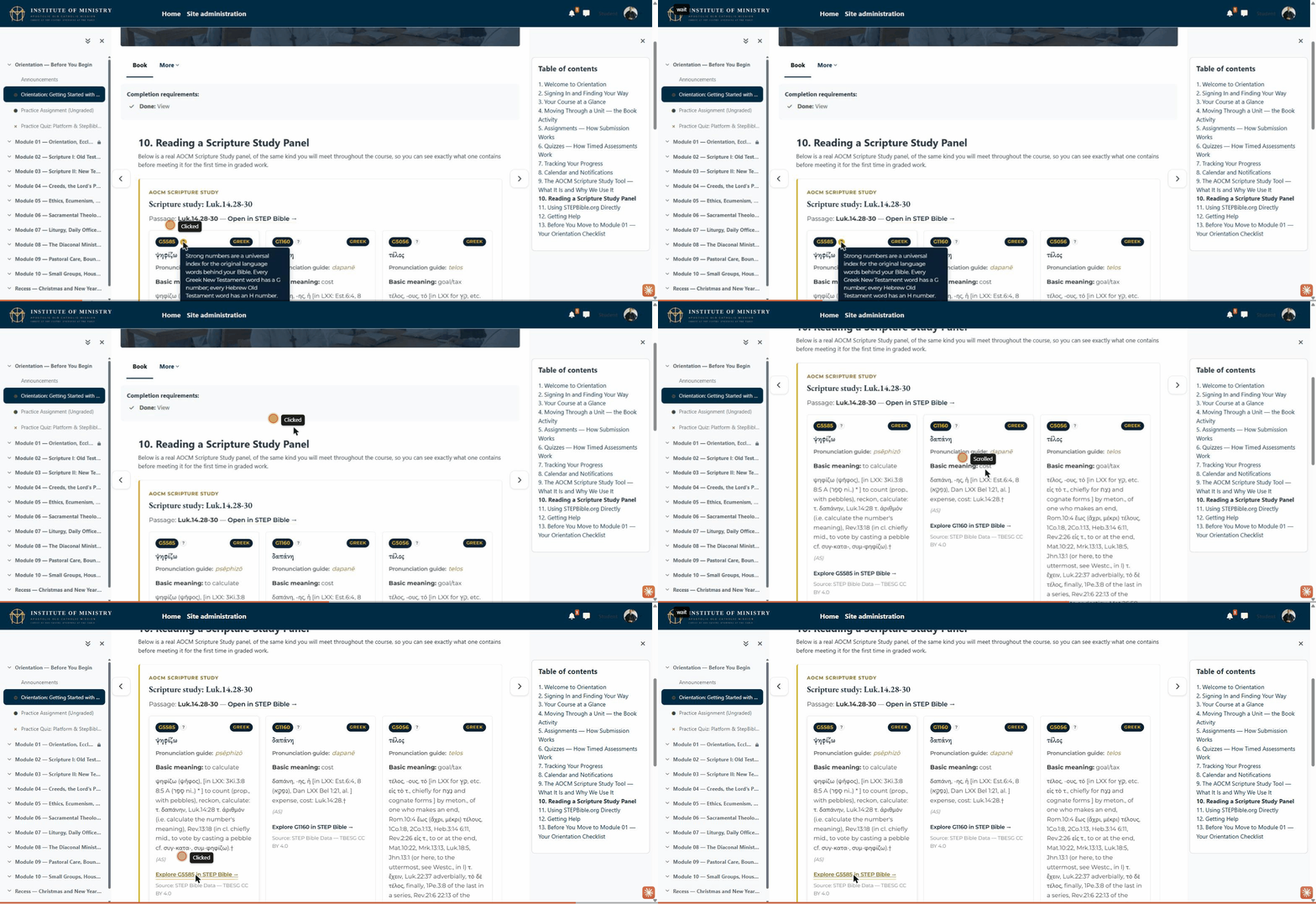
The short recording above shows this in action: opening the "?" tooltip beside a Strong's number, then following an "Explore in STEP Bible" link.