
Unit 3 — What the Church Does at the Altar
- View
Part 1 — Gesture is a language
In the last unit the Church was speaking to you through cloth and colour. In this unit it speaks through movement.
Three gestures at the altar puzzle visitors more than any others: the sign of the cross made in the air over the bread and wine, the lifting of the host after the words of institution, and the breaking of the bread before communion. All three look, to an untrained eye, like ceremony for its own sake. All three are in fact making specific claims, and two of them are considerably older than the buildings they are performed in.
Before we take them one at a time, a general principle. The Church does not use gesture as decoration. It uses gesture because words alone are not how human beings communicate, and never have been. We greet with our hands, mourn with our bodies, and show respect with our posture, in every culture that has ever existed. A religion of the Incarnation — of God taking a body — was never going to confine itself to speech.
Words matter. Silence matters. Gestures matter too.
Part 2 — The sign of the cross
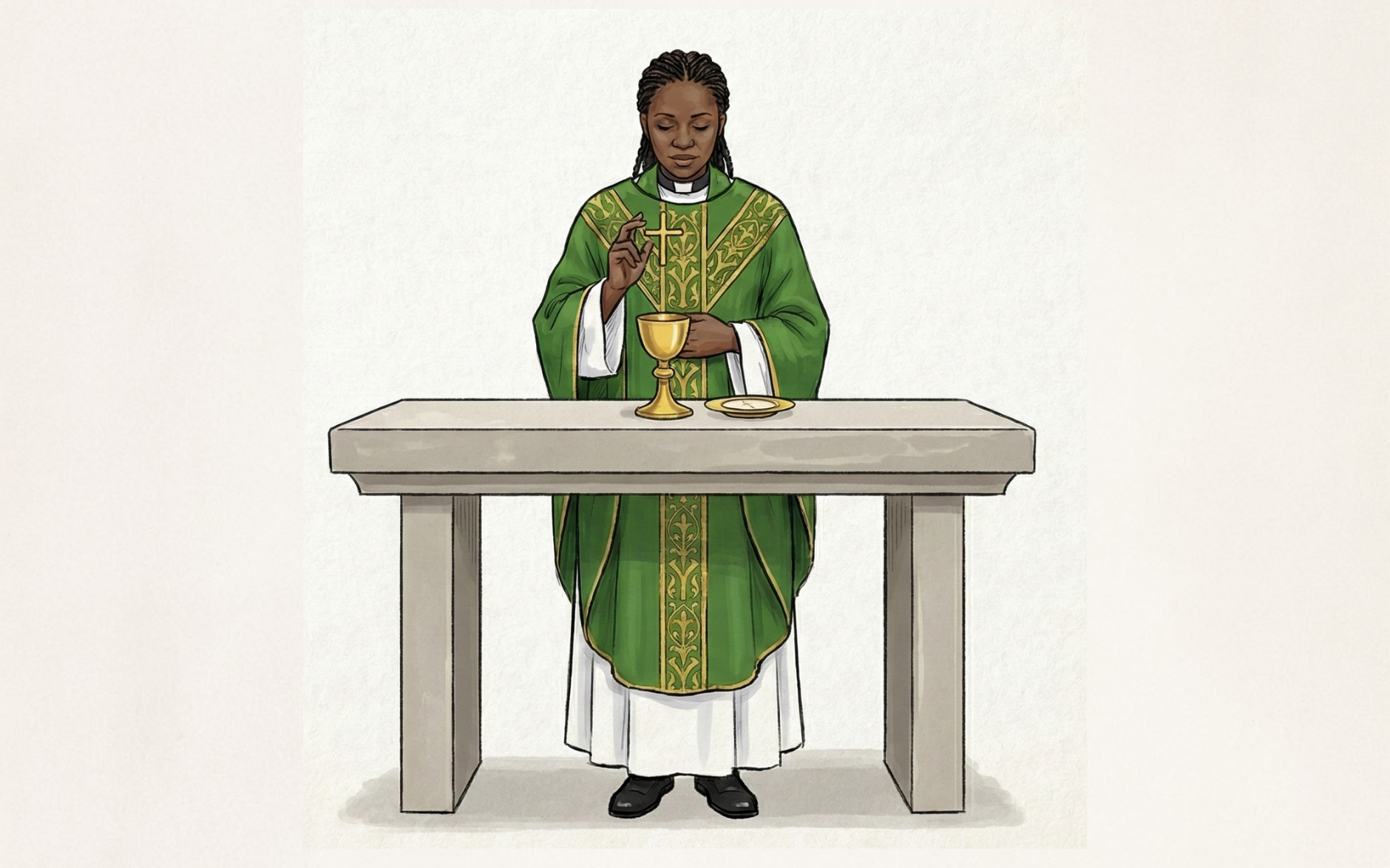
Figure 7 — The sign of the cross made over the gifts. The hand does not wave; it traces a shape, deliberately, and the shape is the whole of the Christian claim.
The sign of the cross is the oldest and simplest of Christian gestures, and its ordinary use is far older and far more domestic than most people realise.
Around the beginning of the third century, the North African writer Tertullian described Christians tracing the sign on their foreheads at every ordinary turn of the day: coming in and going out, dressing, putting on their shoes, washing, sitting down to eat, lighting the lamps at nightfall, going to bed. Not at solemn moments. At all moments. It was the gesture of people who had decided that no part of an ordinary day stood outside the reach of the cross, and it was made small, with one finger, in private, generations before it was made large and publicly in a liturgy.
That domestic origin is worth holding on to, because it changes the character of the gesture entirely. The sign of the cross did not descend from the sanctuary into the home. It rose from the home into the sanctuary. When a priest makes it over the gifts, they are doing in public what Christians had already been doing over their supper for centuries.
The two forms you will see
You will see it in two forms. The small sign is traced with the thumb on the forehead, and often also on the lips and the breast — for instance before the Gospel is read, with the sense of asking that the Word may be in the mind, on the lips, and in the heart. The large sign is made from forehead to breast and shoulder to shoulder, over one's own body, and is the common gesture of blessing, beginning, and ending.
Part 3 — Signing the gifts, and what it claims
When the sign is made over the bread and the wine, it is doing something more specific than a general blessing.
It says, first, that these things are no longer casual. A moment ago this was bread that somebody bought and wine that somebody poured. The sign marks the point at which they are set apart for a purpose, in the same way that a signature marks the point at which a piece of paper becomes an agreement.
It says, second, that what happens here happens through the cross. Not through the priest's devotion, not through the congregation's sincerity, and not through the beauty of the ceremony. The Church's entire claim about the Eucharist runs back to one death, and the gesture keeps pointing at it. Take the cross out of the Eucharist and there is nothing left but a meal with good manners.
And it says, third, that this is an offering rather than a transaction. The gifts are being placed before God, not processed. The hand moves over them the way a hand moves over something entrusted to another's keeping.
Notice what the gesture is not doing. It is not a magical formula, and no tradition in the Western Rite teaches that the shape of the hand accomplishes anything by itself. It is a visible confession of what is being said aloud at the same moment — the body agreeing with the voice.
Part 4 — Why the host is lifted
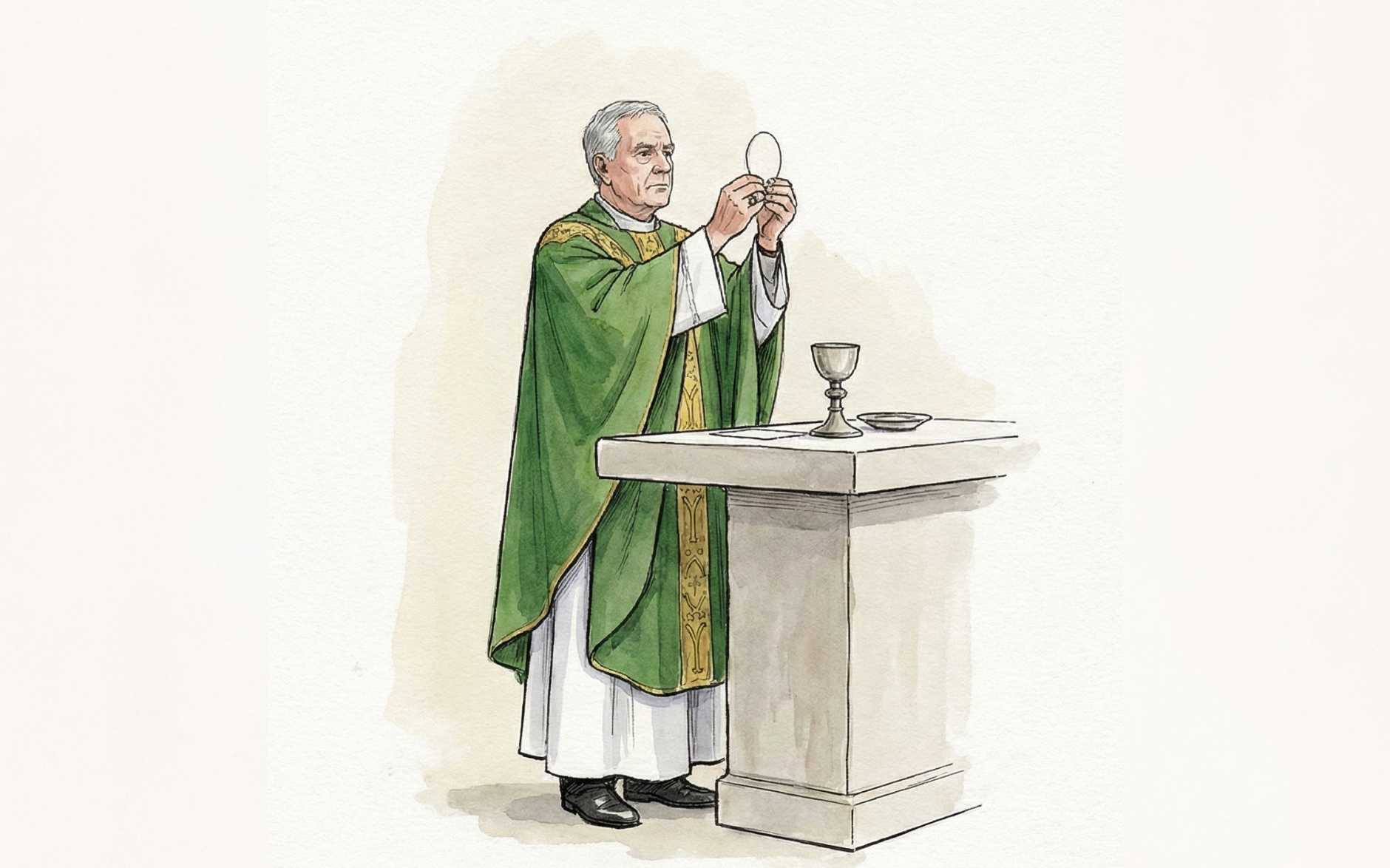
Figure 8 — The elevation. The eye is drawn upward; the intention is that the heart should follow.
To a visitor, the elevation can look like the most theatrical moment in the entire liturgy. Something is raised above the celebrant's head; everyone looks; in some churches a bell is rung and incense is offered. If any moment in a Western liturgy is going to be described as a performance, it is this one.
It is not theatre, and its history explains why.
The elevation as you will see it today is not part of the ancient core of the rite. It becomes prominent in the West around the year 1200, and the earliest clear direction for it that scholars point to comes from the statutes issued by Eudes de Sully, Bishop of Paris from 1196 to 1208, who instructed that after the words of consecration the host should be raised high enough to be seen by all.
Why then? Because of a pastoral situation that has largely disappeared. In the medieval West, ordinary Christians received communion very rarely — often only once a year — while attending Mass constantly. An enormous devotional hunger had nowhere to go. What developed instead was the desire to see: to look upon the sacrament, even when one did not receive it. The elevation was the Church's answer to a congregation that came every week and communicated once a twelvemonth.
You may reasonably think that the underlying situation was a problem rather than a golden age, and most liturgical scholars would agree with you. Frequent communion is far better. But the gesture that situation produced turned out to carry real theology, and it survived the recovery of frequent communion because it was worth keeping.
That theology runs through Scripture on a single thread: things lifted up so that people may look and live.
And the Lord said to him: “Make a bronze serpent, and place it as a sign. Whoever, having been struck, gazes upon it, shall live.”
Numbers 21:8, Catholic Public Domain Version
Christ Himself takes that image and applies it to the cross.
And just as Moses lifted up the serpent in the desert, so also must the Son of man be lifted up, so that whoever believes in him may not perish, but may have eternal life.
John 3:14–15, Catholic Public Domain Version
And when I have been lifted up from the earth, I will draw all things to myself.
John 12:32, Catholic Public Domain Version
So the elevation is not simply a display. It is a deliberate echo. Something is lifted up; the people look; and the looking is itself an act of faith. The gesture draws the eye upward in order to draw the heart to Christ, and the Church has been content to let a physical movement carry that weight because that is exactly what the cross did.
Part 5 — Looking, and the difference from spectacle
This gives us a useful distinction that will serve you throughout the rest of the course.
Spectacle and attention — the difference
Spectacle invites you to watch something. It asks for your attention and offers you an experience in return, and when it is over you have been entertained, moved, or impressed. The subject of a spectacle is the thing performed and the object is you.
Attention in the liturgical sense invites you to look at something in order to be drawn beyond it. You are not the audience; you are a participant whose gaze is part of the act. When it is over you have not been entertained. You have, if it worked, adored.
Everything in this course sits on one side or the other of that line, and the line is not drawn by how elaborate the ceremony is. A very simple gesture performed to impress is spectacle. A very solemn one performed to direct attention to Christ is not. The test is never the quantity of ceremony; it is the direction of travel.
Look. Attend. Worship. In that order, and the third is the point of the first two.
Part 6 — The breaking of the bread
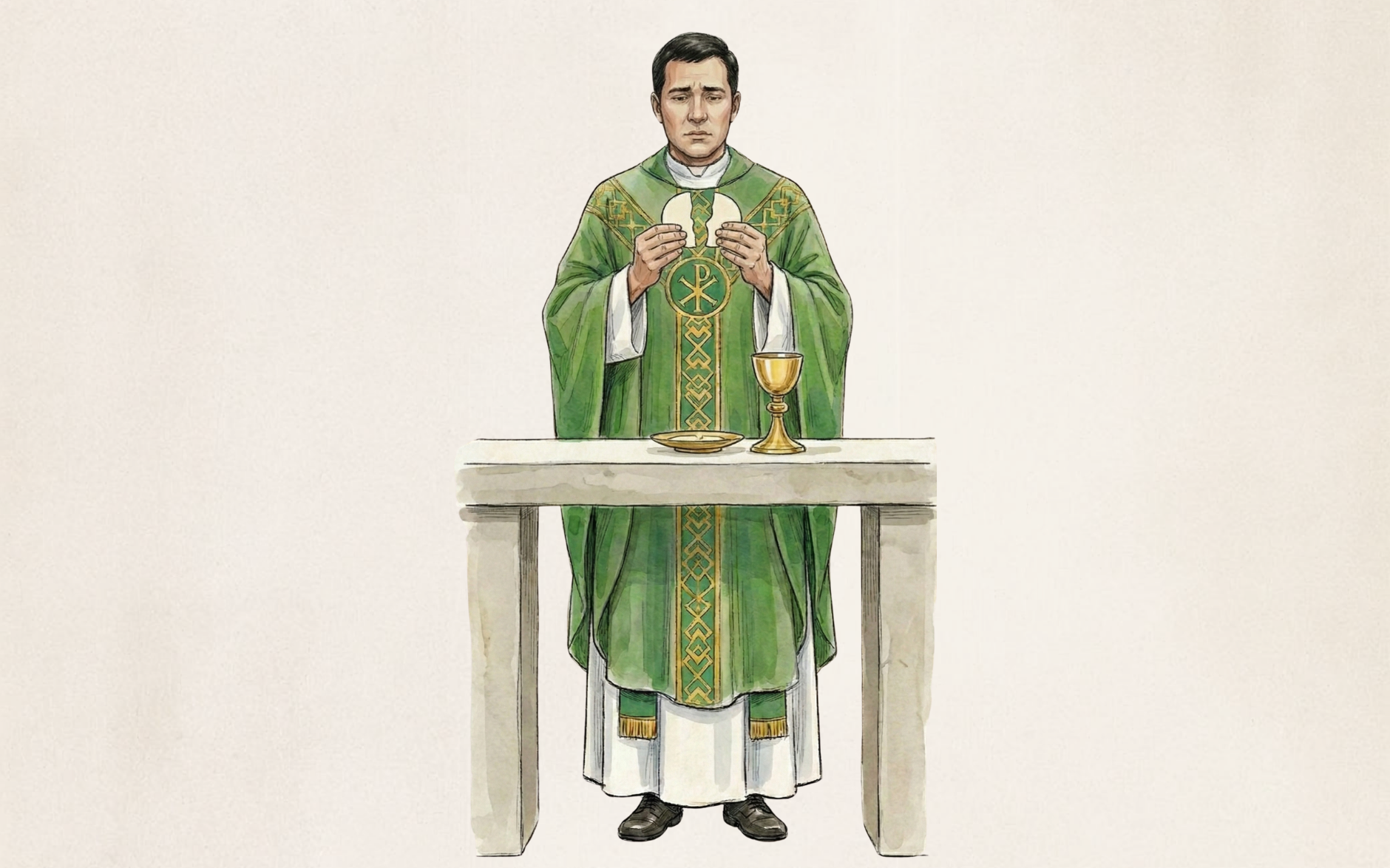
Figure 9 — The fraction. One loaf is broken so that many may share it; the practical necessity and the theology are the same act.
The breaking of the bread is the least showy of the three gestures and by some distance the most important, because for the first Christians it was not a gesture within the rite. It was the name of the rite.
Recall the summary of the earliest Christian life you met in Unit 1: the apostles' teaching, the fellowship, the breaking of the bread, the prayers. And recall Luke's account of the road to Emmaus, where the two disciples finally tell the others how they recognised Him.
And they explained the things that were done on the way, and how they had recognized him at the breaking of the bread.
Luke 24:35, Catholic Public Domain Version
Before there were any of the words you will find in a missal, this is what Christians called what they did.
The gesture began as sheer practicality. A single loaf must be broken before more than one person can eat it. There is nothing symbolic about that; it is a fact about bread. But the early Church saw at once what the practical necessity was saying, and Paul says it explicitly.
The cup of benediction that we bless, is it not a communion in the Blood of Christ? And the bread that we break, is it not a participation in the Body of the Lord? Through the one bread, we, though many, are one body: all of us who are partakers of the one bread.
1 Corinthians 10:16–17, Catholic Public Domain Version
One bread. Many people. One body. The unity is not a sentiment the congregation works up between them; it is a fact about where the bread came from. They are one because they are eating one loaf.
And then there is the other meaning, which is why the fraction is never merely cheerful. Christ broke the bread on the night before He was broken, and He said what it was while doing it.
and giving thanks, he broke it, and said: “Take and eat. This is my body, which shall be given up for you. Do this in remembrance of me.”
1 Corinthians 11:24, Catholic Public Domain Version
He was not describing an accident that was about to happen to Him. He was interpreting it in advance, and He chose to interpret it with a gesture rather than a lecture. When the priest breaks the bread, the congregation is watching Christ's own chosen sign of what He was doing.
Grace is given, Christ is shared, and the Church is gathered into one. What is broken is what draws us into communion.
Part 7 — What accompanies the fraction
Two things commonly accompany the breaking, and you may see either, both, or neither depending on the tradition.
The commixture is the placing of a small fragment of the host into the chalice. It is ancient, and several explanations of its origin circulate — among them a sign of the reuniting of Christ's body and blood in the resurrection, and, in the city of Rome, a practice connected with sending a fragment from the bishop's own celebration to the churches of the city as a sign that there is one Eucharist and not many. The explanations are not mutually exclusive, and the honest position is that its origins are debated.
The fraction anthem is what is sung or said while the breaking takes place — in much of the West, the Agnus Dei, “Lamb of God, who takes away the sins of the world, have mercy on us”. The words were introduced to fill the time the breaking took when the loaves were large and the congregations were larger, which is a good example of a piece of ceremonial that began as a practical solution and stayed because it was true.
You will meet other fraction sentences in other traditions, and the Book of Common Prayer tradition supplies its own. Where practice differs here, it differs harmlessly.
Part 8 — Doing as a form of proclaiming
Pull the three gestures together and you can see what they share.
Paul says something remarkable about the Eucharist that is easy to read past.
For whenever you eat this bread and drink this cup, you proclaim the death of the Lord, until he returns.
1 Corinthians 11:26, Catholic Public Domain Version
Not remember. Not think about. Proclaim — a word about public announcement. Paul is saying that the eating and the drinking are themselves a form of preaching. The action announces something, whether or not anybody adds a sermon to it.
That is the theology underneath every gesture in this unit. The Church proclaims with the body as well as with the voice, because it believes that God has already done exactly that. The sign of the cross announces where the power comes from. The elevation announces that this is to be looked at and adored. The fraction announces a death, a gift, and a unity, all in one movement of the hands.
None of the three is decoration. Each is a sentence.
Part 9 — Why the gestures are restrained
A last observation, and it is one that visitors often notice without being able to name it.
Liturgical gesture is almost always understated. The hands move slowly. The sign is traced, not slashed. The host is raised steadily and held, rather than thrust upward. The bread is broken without flourish. There is a great deal of stillness, and the stillness is not empty.
This restraint is deliberate, and it follows directly from everything above. If the gesture is a sentence, then it needs to be legible, and a legible gesture is an unhurried one. If the gesture points away from the minister, then any excess of feeling in the hands drags attention straight back to the person. The restraint is not coldness. It is the courtesy of a servant who does not wish to be the subject of the conversation.
You will occasionally see it done badly in both directions: rushed to the point of carelessness, or elaborated to the point of self-consciousness. Both are failures of the same virtue. The mean between them is what the tradition calls reverence, and it is learned rather than taught.
Further Reading and Resources
A note about these resources — The links and suggestions below are offered in the spirit of generous formation, not formal obligation. You will not be asked to reproduce specific content from any external source in your assessment. What you will find, however, is that those who engage with these materials tend to write with greater depth, reflect with greater honesty, and bring something richer to their cohort discussions. Think of them as an open door — the Institute has gone to the trouble of finding it for you, and a serious candidate will rarely stand in the doorway when there is so much worth walking into. All external links open on third-party websites. The Institute does not host, control, or endorse third-party content, and links may change over time. If a link no longer works, a simple search using the title and author will usually locate the resource without difficulty.
Primary sources
| Source | Where to find it | Copyright position |
|---|---|---|
| Tertullian, On Prayer, especially the closing chapters on Christian bodily practice and the sign of the cross (about AD 200–206). | newadvent.org/fathers/0322.htm | The English translation of 1885 is in the public domain worldwide; page presentation is the publisher's own. Link only; quote the translated text freely. Caution: Tertullian's later writings are rigorist in tone and he ended outside the Church's communion; read him as an early witness to practice, not as a doctrinal authority. |
| Cyril of Jerusalem, Catechetical Lecture 23 (the fifth Mystagogical Catechesis, about AD 350) — a bishop walking newly baptised Christians through the eucharistic rite, gesture by gesture. | newadvent.org/fathers/310123.htm | The English translation is in the public domain; page presentation is the publisher's own. Link only; quote the translated text freely. One of the most valuable documents in this entire course. |
| 1 Corinthians 10 and 11 — Paul on the one bread and the one body, and on the eating and drinking as proclamation. | sacredbible.org/catholic/ | The Catholic Public Domain Version is entirely in the public domain. Free to quote, print, adapt, and use commercially without permission. |
| The Sarum Missal in English (1884) and The Old Catholic Missal and Ritual (1909) — the rubrics directing the signing of the gifts, the elevation, and the fraction, in two different Western uses. Compare them side by side. | archive.org/details/cu31924092460033 and archive.org/details/a592392300mathuoft | Both public domain. Free to reproduce, adapt, and use commercially. |
Secondary sources
| Source | Where to find it | Copyright position and any caution |
|---|---|---|
| Herbert Thurston, “The Elevation”, in the Catholic Encyclopedia (1909). The standard older account of when and why the elevation appeared, including the Paris statutes. | newadvent.org/cathen/05380b.htm | The 1909 text is public domain; page presentation is the publisher's own. Link only. Caution: written from a Roman Catholic standpoint of its period. |
| Adrian Fortescue, The Mass: A Study of the Roman Liturgy (1912) — the chapters on the canon and the fraction give the fullest older English treatment of these gestures. | archive.org/details/TheMassAStudyOf | Public domain; free for all uses including commercial. Caution: pre-conciliar Roman Catholic in outlook, and its comments on other Western traditions do not reflect this Institute's position. |
| Edmund Bishop, Liturgica Historica (1918) — essays on Western ceremonial development, notable for their scepticism about tidy explanations. | archive.org/details/liturgicahistori00bish | Public domain; free for all uses including commercial. |
| Louis Duchesne, Christian Worship: Its Origin and Evolution — useful here for the development of the Roman canon and the ceremonies attached to it. | archive.org/details/christianworship00duch_1 | Public domain; free for all uses including commercial. Caution: its historical conclusions have been revised by later scholarship. |
Before you move to the next unit
Tick each of these when it is true. If one of them is not true yet, the unit page is still there and nobody is timing you.
- I can explain why the Church uses gesture at all, without saying that it is for effect.
- I can describe how early Christians used the sign of the cross in ordinary daily life, and explain why that origin matters.
- I can say what the signing of the gifts claims, and what it does not claim.
- I can explain roughly when the elevation became prominent in the West and what pastoral situation produced it.
- I can connect the elevation to the bronze serpent and to the lifting up of Christ.
- I can explain the difference between spectacle and attention, and test a ceremony against it.
- I can explain why the breaking of the bread was the earliest name for the whole rite.
- I can explain how one loaf broken says something about the unity of the congregation.
- I can explain why liturgical gesture is deliberately restrained.
- I have sat the Unit 3 quiz and passed it at eighty per cent or better.